


Inside the 10-Piece 1-Person Kansa Thali Set: Why Eating Off 78:22 Bell Metal Bronze Alkalizes Your Meal
🍽️ Metallurgical & Ayurvedic Definition (78:22 Kansa Bronze): Kansa (Bell Metal Bronze) is an ancient...
Read Article →
Double Edge Safety Razors | Zero-Waste Shaving | SAMA Homes Father's Day...
SAMA Homes
Couldn't load pickup availability
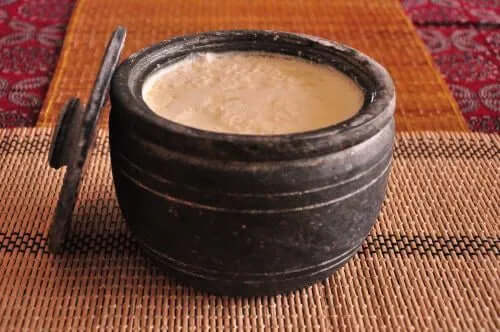
Storing salt, tamarind, pickles or setting curd: Sama Homes maakal (soapstone) containers provide the most natural and aesthetic alternative to make your kitchen traditional and authentic.
These traditional maakal containers are used to make the tastiest & thick curd. Curd sets within 4-5 hours as soapstone retains heat.
Sama Homes soapstone cookware are made of the highest quality stone, has the right density and structure, higher content of calcium, hard and no artificial colours used.
Sama Homes soapstone utensils are tested in NABL accredited laboratory and comply with EU standards for Restriction of Hazardous Substances (RoHS)
Bring Sama Homes soapstone container, a perfect kalchatti utensil for storage to your kitchen and feel the difference!
Caution: If you are using the Containers for storing pickle, the same has to be seasoned for few days with castor oil & Turmeric to seal the pores. This will prevent the oil from pickle to leak through the pores.
We do not accept returns or exchange of the products listed in this category.
Yes! All orders dispatch from our Canadian warehouse in Chestermere, Alberta. Orders over $75 CAD (or the equivalent in your local currency) qualify for Free Standard Global Shipping Worldwide ($15 CAD flat rate under $75 CAD). Standard shipping is tracked wherever available through destination postal/courier networks, and ships via reliable International Air Mail where tracked service is not available. Need faster delivery? You can select our Paid Express Courier Upgrade at checkout. Please note: International orders outside Canada ship Delivered Duty Unpaid (DDU); the recipient is responsible for local import VAT/GST and customs clearance fees. Refusing a parcel at customs results in actual round-trip courier return fees being deducted from your refund.
Orders operate on a strict 12-hour cancellation window from the time of purchase before locking for warehouse fulfillment. Unused, unwashed, factory-sealed items in their original packaging may be returned within 30 days of delivery via an authorized RMA (subject to a 10% inspection/restocking fee; original and return shipping costs are non-refundable). Strict Hygiene Final-Sale Rule: Any grooming tool, razor, blade pack, brush, soap, skincare product, or hydration/cooking/dining vessel that has been unsealed, rinsed, washed, or used is 100% Final Sale. In the rare event of courier transit damage, you must notify us within 24 hours of the carrier delivery timestamp with clear photos of the damaged item, the outer shipping box, and the courier shipping label.
Yes—100%. SAMA Homes (Sairam Solutions Ltd.) is a direct Canadian manufacturer of lab-verified 99.6% pure copper, Kalai brassware, and 78:22 Kansa dinnerware, and an official authorized stockist for every grooming and barber brand in our catalog. For local Alberta customers, we offer Free Concierge Pickup by Appointment (Monday–Friday, 9:00 AM – 5:00 PM MST) at our facility at 140 Kinniburgh Drive, Chestermere, AB—simply message our WhatsApp Concierge at +1 (587) 583-3261 after ordering.
Yes! Every SAMA Homes parcel ships with zero paper price receipts inside—making it ready to gift for weddings, housewarmings (Griha Pravesh), and milestones. For B2B corporate gifting, yoga studios, holistic clinics, and barbershops ordering 10+ units, we offer tiered wholesale pricing and 0%-fee corporate wire or Interac e-Transfer settlement at /pages/wholesale-bulk-orders.
Browsing our global catalog of 13408 authentic items. Explore Master Catalog Directory or Shop 99.6% Pure Copper Bottles.

🍽️ Metallurgical & Ayurvedic Definition (78:22 Kansa Bronze): Kansa (Bell Metal Bronze) is an ancient...
Read Article →
The Microplastic Crisis & The Nordic Return to Pure Copper By Megha Tyagi | Founder,...
Read Article →
Escaping PFAS: The Nordic Guide to the Heirloom Bronze Kitchen A 3,000-word masterclass on eliminating...
Read Article →